
Ripening Chamber Manufacturer in Pune
What a ripening chamber does
A ripening chamber is an airtight, insulated room that ripens fruit evenly using controlled temperature, humidity and ethylene gas. It is used mainly for bananas, mangoes and papayas, at about 14–25 °C depending on the fruit. Falcon Refrigeration designs, makes and installs ripening rooms in Pune and across Maharashtra.
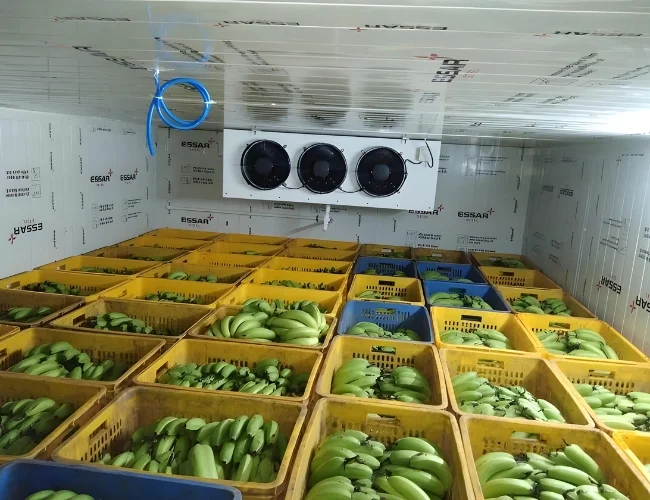
Traders, wholesalers and exporters use these rooms to sell fruit at the right colour on the right day. Controlled ripening replaces calcium carbide, which is banned for fruit ripening in India. It also cuts losses from uneven colour, weight loss and early spoilage.
How controlled ripening works
Bananas, mangoes and papayas keep ripening after harvest. Ethylene, a natural plant hormone, starts this process. In a sealed room, a small, measured dose of ethylene makes a whole batch start ripening at the same time.
A typical ripening cycle has four stages:
- Pull-down: fans and the cooling coil bring the fruit pulp to the set temperature.
- Gassing: ethylene is dosed for about 24 hours while the room stays sealed.
- Venting: fresh air is let in to remove the CO₂ that the fruit gives off.
- Colour and holding: the temperature is stepped down to slow ripening until dispatch.
Fruit gives off heat as it ripens. The refrigeration system must remove this respiration heat, as well as heat coming through the walls. So a ripening room needs more cooling capacity than a cold store of the same size.
Ripening conditions by fruit
Each fruit, and often each variety, needs its own programme. The table below shows common starting points. Trial batches and your supplier's advice set the final values.
Typical ripening conditions (confirm for your project)
| Fruit | Pulp temperature | Relative humidity | Ethylene dose | Typical cycle |
|---|---|---|---|---|
| Banana | 14–18 °C | 90–95% | 100–150 ppm for about 24 h | 4–8 days |
| Mango | 18–22 °C | 90–95% | About 100 ppm for about 24 h | 4–6 days |
| Papaya | 20–25 °C | 85–95% | About 100 ppm for about 24 h | 3–5 days |
Higher pulp temperatures ripen fruit faster, but shelf life and peel quality suffer. Bananas held below about 13 °C can suffer chilling injury and a dull grey peel. CO₂ is kept below about 1%, because higher levels slow ripening.
Check the current FSSAI guidance on ethylene ripening before you set dose levels for your fruit.
Pressurised airflow for even ripening
Most modern banana ripening rooms use forced, or pressurised, airflow. Pallets stand in two rows with a closed air channel between them. A tarpaulin or baffle seals the top, so fans pull air through the cartons instead of around them.
This brings every carton to nearly the same pulp temperature. It also removes respiration heat quickly during gassing. In older open rooms, air passes over the stack, so fruit ripens unevenly and more slowly.
Use vented cartons with holes that line up when stacked. Leave the specified gaps at walls and between pallets, so the air path stays sealed.
Construction and equipment
Insulated, airtight room
Walls and ceiling are built from PUF insulated panels with sealed joints. The room must be gas-tight, so ethylene stays in during gassing and out of other rooms. An insulated cold room door with good gaskets keeps the seal at the entrance.
Refrigeration and heating
Each room has an evaporator with high-airflow fans. It connects to an outdoor condensing unit sized for the peak ripening load. A small heater keeps fruit at temperature in winter.
Many sites run each room on its own refrigeration circuit. Then one fault does not stop every batch.
Humidity, ethylene and CO₂ control
- A humidifier holds RH at 90–95%, so fruit does not lose weight or show peel damage.
- Ethylene is dosed from a gas cylinder through a metered valve, or made on site by a catalytic generator.
- A CO₂ sensor opens a motorised vent, or runs an exhaust fan, when levels rise.
- Gas detection and interlocks guard against leaks, because pure ethylene is flammable.
Controls and monitoring
A microprocessor or PLC controller runs a stored programme for each fruit and stage. Pulp probes measure fruit temperature, not just air temperature. Data logging, alarms and remote access let you follow each batch from a phone or office PC.
Sizing your ripening chambers
Size depends on your daily dispatch, not just your total volume. If fruit ripens in five days and you dispatch daily, you need about five rooms. Each room is loaded, gassed and emptied in turn.
Typical room sizing (confirm for your project)
| Batch per room | Common buyer | Layout notes |
|---|---|---|
| 3–6 tonnes | Retailers, small traders | Single-row or small two-row pressurised room |
| 8–15 tonnes | Wholesalers, about one truckload | Two-row pressurised room, pallet or carton loading |
| 18–25 tonnes | Distributors, retail chains | Two-row or multi-tier pressurised room, forklift access |
To size a project, we need your fruit types, daily dispatch, carton or crate type and loading method. We also check site power and space for the outdoor units.
Many sites pair ripening rooms with a holding store for green or ripe fruit. For that, see our work as a cold room manufacturer in Pune.
Running costs and care
A ripening room runs in cycles, so the cooling load changes from day to day. Variable-speed fans and short door openings cut power use between stages. A refrigeration energy audit can show where an existing site wastes power.
- Calibrate ethylene, CO₂ and temperature sensors on a fixed schedule.
- Clean evaporator coils, drain lines and humidifier nozzles.
- Check door gaskets and panel joints for gas leaks.
- Wash floors and walls between batches to limit mould.
Falcon also handles installation, commissioning and service for the rooms we build. Share your fruit and daily volume when you request a ripening room quote.
Frequently asked questions
How long does banana ripening take in a chamber?
Banana ripening in a controlled room usually takes 4 to 8 days. The time depends on pulp temperature, variety and the peel colour your buyers want. Warmer settings ripen fruit faster but shorten shelf life. Most traders choose a programme that matches their dispatch days and market demand.
Is ethylene ripening safe for fruit?
Yes. Ethylene is a natural hormone that fruit makes itself, and a small dose only triggers normal ripening. It leaves no harmful residue on the fruit. This is why it replaces calcium carbide, which is banned for fruit ripening in India. Follow current FSSAI guidance on how ethylene is applied.
Can one room ripen bananas, mangoes and papayas?
Yes, one room can handle different fruits, but only one type per batch. Each fruit needs its own temperature, humidity and ethylene programme. Mixing fruits in one batch gives uneven results. The controller stores separate programmes, so you can switch fruit between cycles after cleaning the room.
Why does a ripening room need CO₂ venting?
Ripening fruit gives off carbon dioxide. If CO₂ rises above about 1%, ripening slows and the batch can ripen unevenly. A CO₂ sensor opens a vent or starts an exhaust fan to bring in fresh air. Venting is timed so the room does not lose too much ethylene or humidity.
What details do you need to quote a ripening room?
We need your fruit types, daily dispatch in tonnes, the ripening days you need, and your carton or crate type. Site details also matter, including space, power supply and loading method. With this, our engineers size the rooms, refrigeration and controls, then give you a written specification and price.